Cost for New Siding Installation: Factors, Materials, Labor, and Budgeting
Exploring the cost for new siding installation opens up a world of considerations, from the factors influencing the final price to the types of materials available and the labor costs involved. This guide delves into the intricacies of budgeting for a siding project, offering insights and tips to help you navigate the process smoothly.
Factors Affecting Cost
When considering the cost of new siding installation, there are several factors that can influence the overall price. Understanding these factors can help homeowners make informed decisions and budget accordingly.
Siding Materials
The type of siding material chosen is a significant factor in determining the cost of installation. Here is a comparison of the cost implications of various siding materials:
- Vinyl Siding:Vinyl siding is one of the most affordable options, making it a popular choice for homeowners on a budget. It is easy to install, which can help reduce labor costs.
- Fiber Cement Siding:Fiber cement siding is a durable and low-maintenance option that tends to be more expensive upfront. However, its longevity and minimal upkeep requirements can result in cost savings over time.
- Wood Siding:Wood siding provides a classic look but requires more maintenance than other materials. The initial cost may be higher, and ongoing maintenance can add to the overall expenses.
- Aluminum Siding:Aluminum siding is lightweight and easy to install, but it may dent easily. The cost of aluminum siding falls between vinyl and fiber cement options.
Size of the Project
The size of the project, in terms of the square footage of the home, will directly impact the cost of new siding installation. Larger homes require more materials and labor, leading to higher overall costs.
Additional Features
Additional features such as trim work, insulation, and removal of existing siding can add to the total cost of the project. These extra services and materials contribute to the complexity of the installation process, affecting the final price.
Location and Accessibility
The location of the home and its accessibility can also influence the cost of siding installation. Homes in remote areas or with challenging terrain may incur additional charges for transportation and labor, impacting the overall cost.
Contractor Experience
The experience and reputation of the contractor hired for the installation play a role in determining the cost. Highly skilled contractors may charge higher rates for their services, but their expertise can ensure quality workmanship and a durable siding installation.
Types of Siding Materials
When considering new siding installation, there are various types of siding materials available in the market. Each material comes with its own set of features, durability, and maintenance requirements.
Vinyl Siding
Vinyl siding is a popular choice due to its affordability and low maintenance. It is durable, resistant to rot, and comes in a wide range of colors and styles.
| Material | Average Cost per Square Foot |
|---|---|
| Vinyl | $3
|
Fiber Cement Siding
Fiber cement siding is known for its durability and resistance to fire, rot, and pests. It is available in various textures and can mimic the look of wood or stucco.
| Material | Average Cost per Square Foot |
|---|---|
| Fiber Cement | $5
|
Wood Siding
Wood siding offers a natural and timeless look to a home. It requires more maintenance compared to other materials, such as regular painting or staining, to prevent rot and pests.
| Material | Average Cost per Square Foot |
|---|---|
| Wood | $6
|
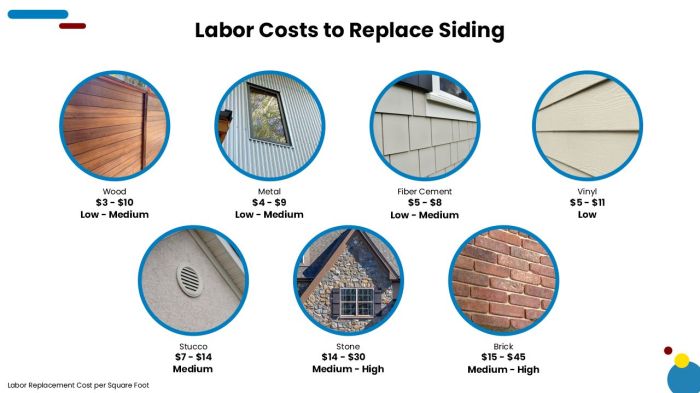
Labor Costs and Installation Process
When it comes to new siding installation, labor costs play a significant role in the overall expenses. It's essential to understand the typical labor costs associated with siding installation to budget effectively and plan accordingly
Additionally, knowing the installation process can help you ensure that the work is done efficiently and to your satisfaction.
Typical Labor Costs
- On average, labor costs for siding installation can range from $40 to $70 per hour, depending on the region and the complexity of the project.
- For a standard 1,500 square foot home, labor costs can amount to anywhere between $2,000 to $6,000.
- Factors that can affect labor costs include the type of siding material, accessibility of the installation site, and any additional preparation or repair work needed.
Installation Process
- The first step in the installation process is preparing the exterior of the house by removing the existing siding, repairing any damaged areas, and ensuring a smooth surface for the new siding.
- Next, the siding panels are measured, cut, and installed according to the manufacturer's instructions, ensuring a proper fit and alignment.
- Finishing touches such as caulking, sealing, and painting may be required to complete the installation and enhance the appearance of the siding.
Tips for Reducing Labor Costs
- Consider scheduling the installation during the off-peak season when contractors may offer lower rates to fill their schedule.
- Opt for simpler siding designs and materials that are easier and quicker to install, reducing labor hours required.
- Coordinate with the installation crew to ensure that the work area is clear and accessible, minimizing delays and maximizing efficiency.
- Get multiple quotes from different contractors to compare labor costs and choose the most competitive offer without compromising on quality.
Cost Estimation and Budgeting
Estimating the total cost for new siding installation is crucial to ensure you are prepared financially for the project. It involves considering various factors such as materials, labor, and additional expenses that may arise during the process.
Strategies for Budgeting and Planning
- Research Different Siding Materials: Compare the costs of various siding materials such as vinyl, wood, fiber cement, and metal to determine the most cost-effective option for your budget.
- Get Multiple Quotes: Reach out to multiple siding contractors to get quotes for the project. Compare the prices and services offered to choose the best option that fits your budget.
- Plan for Contingencies: Set aside a contingency fund for unexpected expenses that may arise during the installation process. It's important to be prepared for any surprises to avoid going over budget.
- Consider DIY Options: If you have the skills and experience, you can consider doing some of the siding installation work yourself to save on labor costs. However, make sure you are comfortable with the task at hand to avoid costly mistakes.
Cost-Saving Measures
- Timing: Consider scheduling the siding installation during the off-season when contractors may offer discounts or lower prices due to lower demand.
- Bundle Services: If you have other home improvement projects in mind, consider bundling them with the siding installation to potentially negotiate a lower overall cost.
- Maintain Existing Features: If possible, try to preserve existing features of your home that are in good condition. This can help reduce the need for additional repairs or replacements, saving you money in the long run.
- Energy Efficiency: Opt for energy-efficient siding materials that can help lower your utility bills over time. While the initial cost may be higher, the long-term savings can make it a cost-effective choice.
Closing Summary
In conclusion, understanding the cost dynamics of new siding installation is key to making informed decisions for your home improvement projects. By grasping the factors at play, choosing the right materials, managing labor costs efficiently, and budgeting wisely, you can embark on your siding installation journey with confidence.
Commonly Asked Questions
What factors can influence the cost of new siding installation?
Factors like the size of the project, choice of materials, labor expenses, and any additional preparatory work can all impact the total cost.
How do different siding materials vary in terms of cost?
Siding materials can vary significantly in cost, with options like vinyl being more budget-friendly compared to cedar or fiber cement.
What are some tips for reducing labor costs during siding installation?
You can minimize labor costs by ensuring clear communication with your contractors, organizing the work area efficiently, and avoiding unnecessary delays.
How can one estimate the total cost for a new siding installation project?
Estimating the total cost involves calculating material expenses, labor fees, permits, and any unforeseen costs that may arise during the project.
Are there effective strategies for budgeting and planning for siding replacement?
Creating a detailed budget, researching material prices, obtaining multiple quotes from contractors, and setting aside a contingency fund can help in effective budgeting.