Labor Cost for Siding a House: Factors, Materials, Calculations, and Tips
Exploring the intricacies of labor cost for siding a house, this article delves into various factors, materials, calculation methods, and tips to optimize expenses. As we unravel the complexities of labor costs, readers will gain valuable insights into this crucial aspect of home improvement projects.
Factors influencing labor cost for siding a house
When it comes to determining the labor cost for siding a house, several factors come into play that can significantly impact the overall price. Understanding these factors is crucial for homeowners looking to budget for their siding project effectively.
1. Type of Siding Material
The type of siding material chosen for the house can have a substantial impact on labor costs. For example, vinyl siding may be quicker and easier to install compared to wood siding, which requires more intricate work and can take longer.
This difference in installation complexity directly affects the labor cost.
2. Size and Shape of the House
The size and shape of the house also play a significant role in determining labor costs. A larger house will naturally require more time and effort to complete the siding installation, leading to higher labor costs. Additionally, houses with complex shapes or multiple stories may require more skilled labor and specialized equipment, further increasing the overall cost.
3. Existing Siding Removal
If there is existing siding that needs to be removed before the new siding can be installed, this will add to the labor cost. Removing old siding can be a time-consuming and labor-intensive process, especially if there are any underlying issues that need to be addressed before the new siding can be installed.
4. Accessibility of the House
The accessibility of the house can also impact labor costs. Houses located in hard-to-reach areas or with limited space for equipment and materials may require additional time and effort to complete the siding installation, resulting in higher labor costs.
5. Labor Rates and Experience
Labor rates and the experience of the siding contractors involved in the project will also influence the overall labor cost. Highly skilled and experienced contractors may charge higher rates for their services, but their expertise can lead to a more efficient and high-quality installation, potentially saving money in the long run.
Types of siding materials and their impact on labor costs
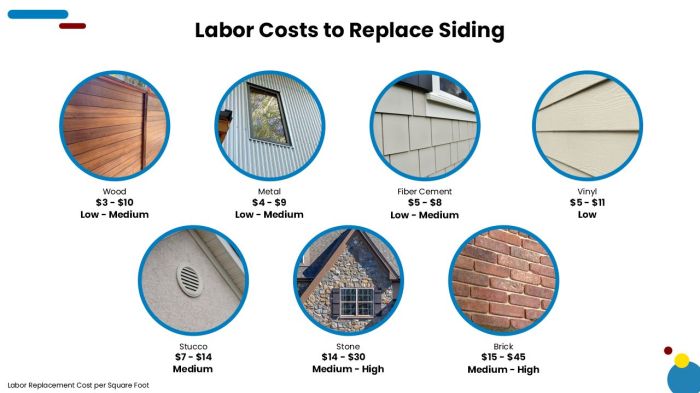
When it comes to siding a house, the choice of material can significantly impact labor costs. Different siding materials have varying installation complexities, which in turn affect the amount of time and effort required from laborers. Let's explore some common siding materials and how they influence labor costs.
Vinyl Siding
Vinyl siding is one of the most popular choices for homeowners due to its affordability and low maintenance. The installation process for vinyl siding is relatively straightforward, making it a cost-effective option in terms of labor. Laborers can typically install vinyl siding quickly and efficiently, resulting in lower labor costs compared to other materials.
Fiber Cement Siding
Fiber cement siding is known for its durability and resistance to elements such as fire and moisture. However, the installation of fiber cement siding requires more specialized tools and techniques, leading to higher labor costs. Laborers may need to spend more time and effort to properly install fiber cement siding, making it a more labor-intensive and costly option.
Wood Siding
Wood siding offers a classic and natural look to a house, but it requires regular maintenance to prevent rot and decay. The installation of wood siding can be more time-consuming compared to other materials, as each piece needs to be carefully cut and fitted.
Labor costs for wood siding may be higher due to the precision and skill required during installation.
Aluminum Siding
Aluminum siding is lightweight and durable, making it a popular choice for homeowners
Homeowners should consider not only the initial cost of the material but also the labor requirements associated with its installation when making a decision.
Labor Cost Calculation Methods
Calculating labor costs for siding a house requires precision and accuracy to ensure a successful project completion within budget. Various methods are used to determine labor costs effectively.
Time and Material Method
The time and material method involves calculating labor costs based on the time spent by workers and the materials used for the siding project. This method provides a detailed breakdown of labor costs, making it easier to track expenses and make adjustments as needed.
Square Footage Method
The square footage method calculates labor costs based on the total square footage of the house that needs siding. By determining a labor cost per square foot, this method simplifies the estimation process and provides a clear understanding of labor expenses.
Software Tools for Labor Cost Estimation
Using specialized software tools can greatly assist in calculating labor costs accurately and efficiently. Programs like QuickBooks, Xactimate, and PlanSwift offer features to input project details, labor rates, and material costs to generate precise labor cost estimates.
Tips for optimizing labor costs in siding projects
Proper planning and preparation are essential when it comes to optimizing labor costs in siding projects. By implementing smart strategies, you can reduce labor expenses without compromising on the quality of the work. Negotiating labor rates with contractors can also play a significant role in managing costs effectively.
Efficient Time Management
- Ensure all materials are on-site and ready for installation before the start of the project to avoid delays.
- Create a detailed schedule outlining tasks and deadlines to maximize efficiency and minimize labor hours.
- Coordinate with contractors to optimize workflow and avoid unnecessary idle time.
Proper Training and Supervision
- Invest in training for your crew to ensure they are skilled and efficient in their work, reducing the need for rework or corrections.
- Supervise the project closely to address any issues promptly and prevent costly mistakes.
Use of Technology
- Explore technology solutions such as project management software or communication tools to streamline processes and improve communication among team members.
- Consider using advanced equipment or tools that can speed up the installation process and reduce labor hours.
Negotiation with Contractors
- Request competitive bids from multiple contractors and compare rates to ensure you are getting a fair price for the work.
- Negotiate with contractors on labor rates, payment terms, and any additional costs to secure the best deal for your siding project.
Conclusion
In conclusion, understanding labor costs for siding a house is essential for homeowners and contractors alike. By considering the factors, materials, and strategies discussed, individuals can make informed decisions and effectively manage expenses in their siding projects. Dive into the world of labor costs and pave the way for successful home renovations.
Q&A
What factors can impact labor costs for siding a house?
Factors like the size of the house, location, complexity of design, and accessibility can influence labor costs.
How does the choice of siding material affect labor costs?
The choice of siding material can impact labor costs based on installation complexity, durability, and maintenance requirements.
Why is accurate labor cost estimation important in a siding project?
Accurate labor cost estimation is crucial for budget planning, cost control, and ensuring the project stays within financial constraints.
What are some strategies for reducing labor costs without compromising quality?
Strategies include proper planning, efficient use of resources, optimizing workflow, and negotiating rates with contractors.